Custom home builders who seek to attract the high-end home buyer know that aesthetics are paramount. The discerning buyer expects more. They want a house that delivers a signature design and stunning curb appeal, setting it apart from the neighborhood and the surrounding area. At the same time, they are looking for high-performance, low-maintenance materials to deliver such a look. They do not want to contemplate constant staining or refinishing to maintain their home’s overall appearance.
When it comes to the external cladding, it can be daunting to find and source the ideal materials that meet this high-stakes design challenge while also ensuring that those materials remain resilient and durable over time.
Then come the current trends and how they dictate what the home must look like. Today’s custom-built homes often display a multi-faceted look with multiple materials and textures, particularly as it relates to the exterior cladding. This means masonry, specific wood, and stone are often married together. Merging such traditional materials for the blended look can drive up costs and impact efficiency.
Fortunately, today’s custom home builder can achieve the desired modern look while circumventing rare product sourcing for the façade.
One of the best options: fiber cement.
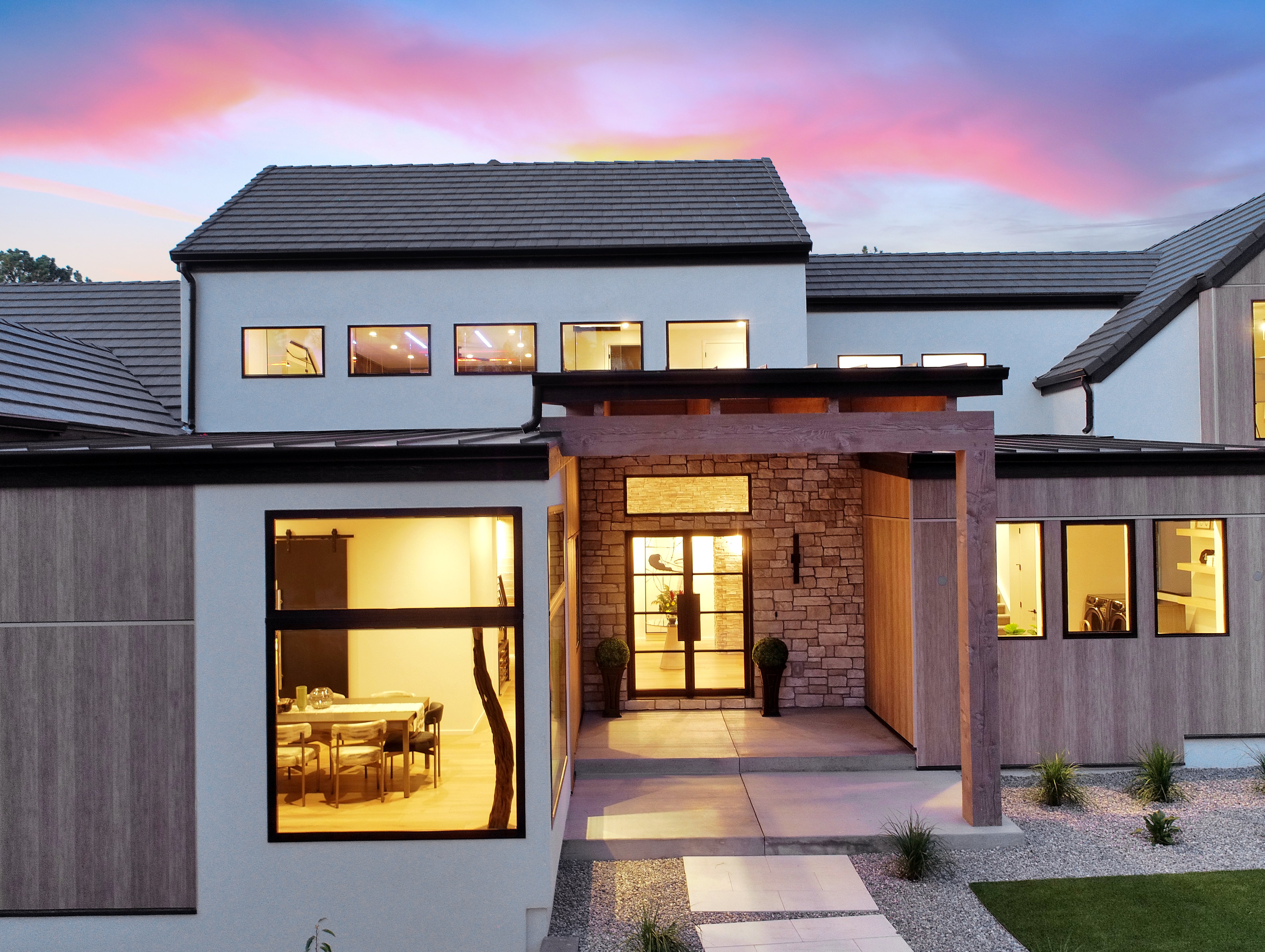
Too often overlooked, fiber cement exterior cladding is a modern means for achieving a high-end or custom look without the challenges associated with sourcing high-design home materials. Contemporary fiber cement products afford designers, builders, and homeowners unmatched versatility, performance, and ease of installation.
Fiber cement traces its roots to the turn of the 20th century. Thanks to advances in technology and material science, the cladding option has evolved to deliver enhanced safety, durability, and cost competitiveness in the modern construction environment. Manufacturers offer boundless options to choose from and have their own brand-wide installation methods, regardless of look. These advances not only benefit a custom-built single-family home’s look and fiscal bottom line, but they also remove the headaches generated by material sourcing and future maintenance.
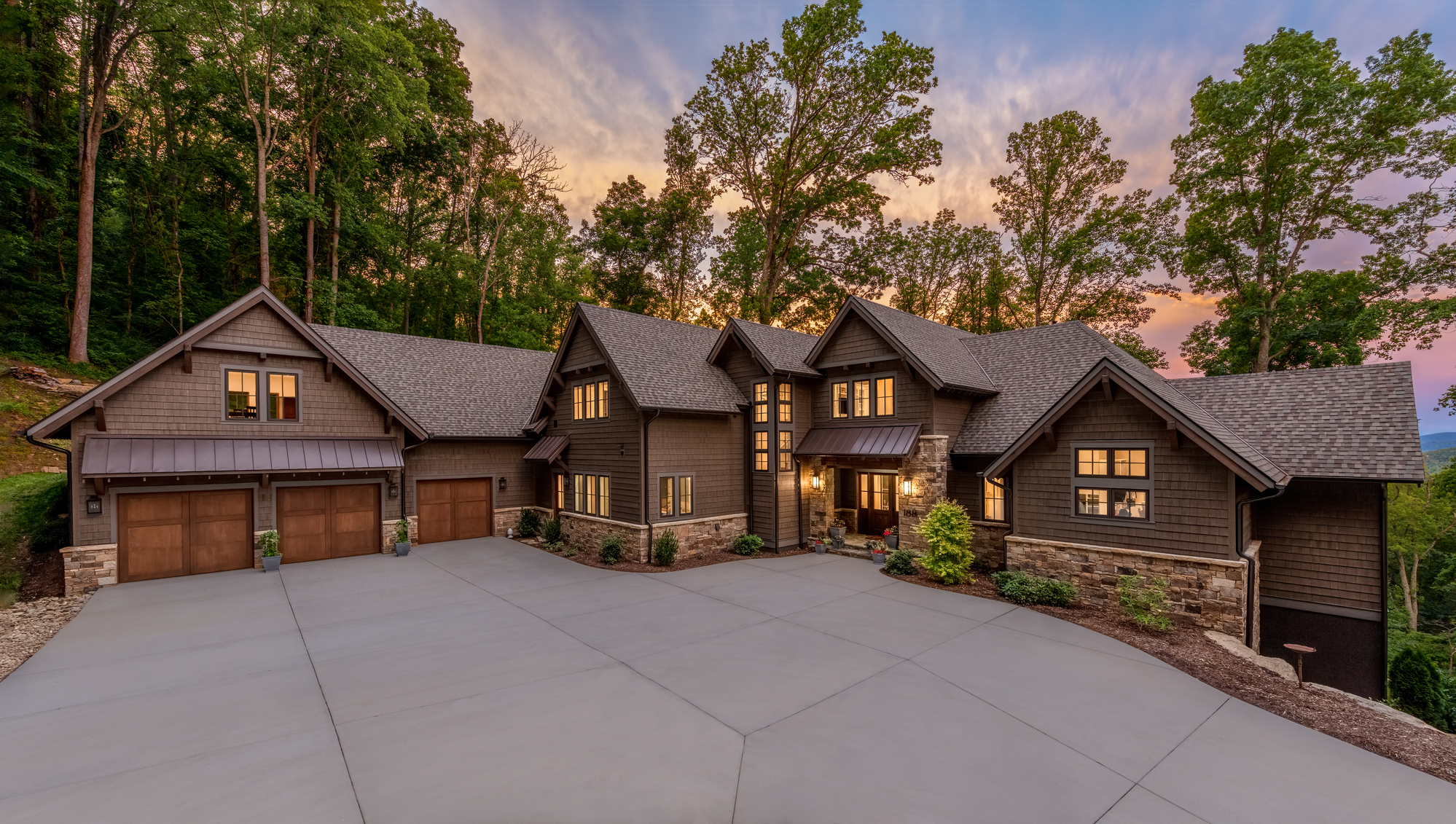
Custom homes can shine when they showcase cladding such as exotic woods or specific masonry. With that look comes special considerations. Higher costs aside, a specialized workforce is often required for sourcing the product and installing it so that it aligns with specific parameters.
This is where fiber cement cladding shines.
When being formed, fiber cement is malleable, allowing for specific impressions and textures to be forced upon it to imitate the likes of wood, concrete, brick, stone, and more. Starting at thicknesses of 5/8” (16mm) and up, architectural wall panels (AWP) leave the factory far thicker and more resilient than many other siding options. Panels range from small, textured segments that resemble shake cladding to broad, minimalist panels that shine with vibrant color and high glosses. Once installed, fiber cement cladding – particularly architectural wall panels – strikes a look that is fuller than thinner cladding options. No other product balances durability with such a beautiful, delicate aesthetic.
This was particularly valuable for a 4,150 square-foot custom home in California’s Bay Area that was renovated with a Japanese aesthetic. The home employs clean lines, delicate details, and a mix of materials. Though a concrete look was coveted in specific areas, weight was an issue. Luckily, the homeowner found success with fiber cement that was patterned to mirror concrete.
Exotic hardwoods, while beautiful, require immense resources to be cut down, processed, and subsequently transported from the source to the custom home site. Cedar, for example, can be one of the most expensive lumber choices for home construction because of its rarity. After being installed with significant care and consideration, homeowner maintenance will still be required indefinitely. Other popular woods like pine and spruce will most certainly degrade in performance and appearance over time. Both are also susceptible to moisture intrusion, rot, pest infestation, and more. That means it will need to be preserved, stained, treated, and maintained for it to continue delivering a desirable look.
Fiber cement’s composition allows for such looks without the associated red tape. Nichiha’s VintageWood series not only allows for numerous traditional shades of wood board but also engineers corner options for a seamless look for edges and soffits, areas where it is far more difficult for real wood to perform. Fiber cement is often produced domestically, which comes with desirable shipping times and shorter distances between source and home, thereby lowering the transportation footprint.
Builders who install AWP as exterior cladding can produce the peace of mind that comes with modern material science via fiber cement: The desired look of real wood and generations of no-maintenance cladding, something unmatched by even the most resilient of wood species.
Today’s custom home builder must give significant consideration to how their homes perform against the elements and severe weather. In coastal and tropical climates, fiber cement cladding is hugely popular for its impressive resilience to hurricanes, hail, and other severe storms. Thanks to its physical composition, the material has an extremely high impact resistance compared to wood and vinyl siding. It also resists the damaging effects of thermal expansion in areas that experience significant heat and temperature fluctuations. Many fiber cement products like Nichiha’s architectural wall panels even feature a built-in rainscreen, upping the ante in moisture management. The result? A strong capacity to withstand severe wind pressure in storms and a high resistance to water penetration when properly installed.
Though damage is less likely than with other cladding products, if it is necessary, fiber cement panels can be replaced by removing fewer panels than the whole façade.
On the other side of the elemental spectrum, fire resistance is a welcome feature for those living in dry climates or those prone to wildfires. When tested against ASTM E-84 standards, panels from Nichiha exhibited flame spread and smoke-developed indexes of 0. A protected wall successfully endured a 60-minute fire exposure without developing excessive unopened surface temperatures or allowing flaming on the unexposed side of the siding assembly. In fact, a subsequent hose stream test did not penetrate the interior sheathing.
This fire resistance was a saving grace for a Northern California homeowner who, during a California firestorm, saw a wildfire rapidly surround their 2,000-square-foot home. The area’s dry climate was no match for the swiftly moving fire, removing any chance of a possible evacuation. Out of options, the family sought shelter in a secondary 1,400-square-foot structure on the property that was clad with Nichiha. That structure survived; the original home did not.
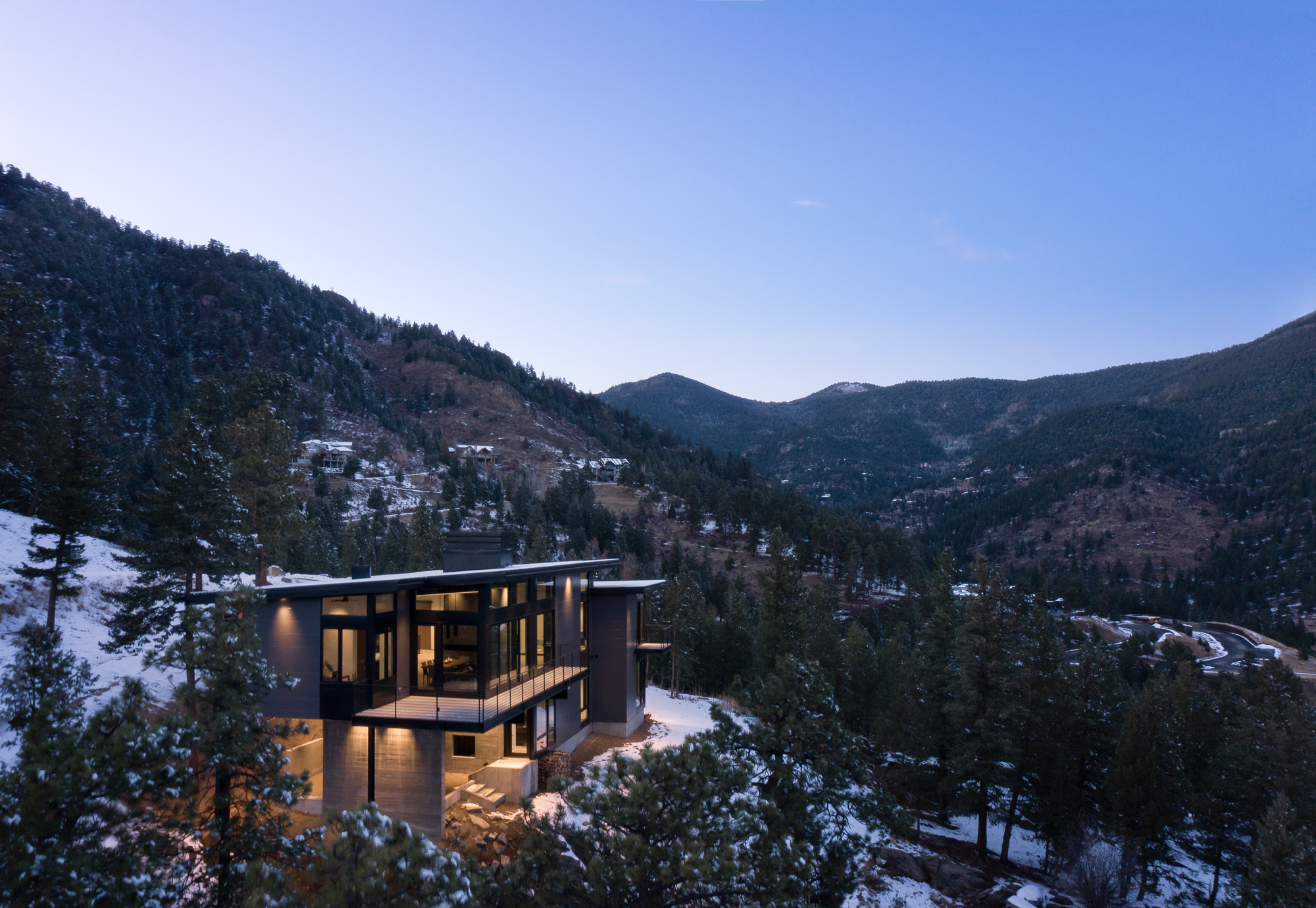
Fiber cement cladding is technologically spectacular for the natural materials that it can emulate – wood, masonry, and more.
Products like Nichiha’s RoughSawn can mimic a variety of premium-look wood cladding. This can easily be applied alongside any of their other cladding products, including Nichiha’s ModernBrick and Novenary panels. Custom colors are available for a large variety of fiber cement panels, including those like Nichiha’s Illumination and Latura V-Groove series. And in these specific cases, custom color is not subject to additional costs or quantity minimums, a true boon for custom home and high-end residential projects.
Because fiber cement’s resemblance to traditional materials is so robust, the available offerings continue to grow, with numerous options for brick, wood, concrete, and even stone. This affords the home builder an opportunity to source product from a single manufacturer. Because these companies ensure continuity and uniformity in the way the product is installed, installation is consistent throughout their product lineups. This means that a specialized labor force is not required for installation. In fact, because the manufacturing of fiber cement cladding has been so thought out, it can be installed by a single person in some instances.
All of this equates to unmatched cost savings for all parties involved in the build. If so inclined, the difference in costs between fiber cement and the in-the-flesh traditional material would allow additional dollars to be used for other project details elsewhere.
No longer are builders and designers limited in expression because of material sourcing for their designs. Fiber cement can be customized to look like virtually any material, and in certain configurations, it can be painted nearly any color imaginable. It creates the authentic look and feel of traditional materials with modern material science while also promising decades of maintenance-free living to the owner. It also enables home owners to capitalize on today’s design trend of multiple materials on a single façade.
The end result: A substantially wider design palette for the custom home builder seeking to meet the escalating demands of today’s custom home buyer.